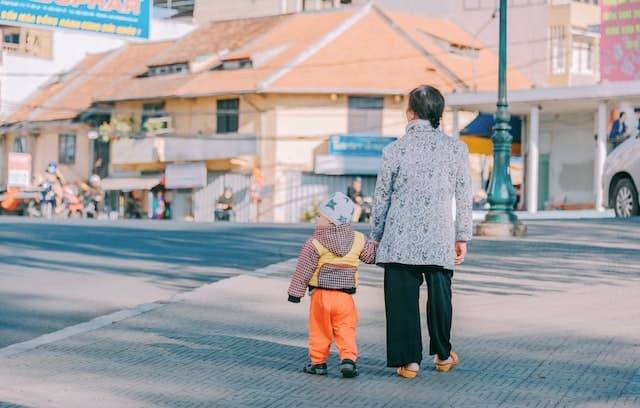
For many people, the passing of a grandmother or grandfather is one of the first experiences we have with death. That is one reason why the loss of a grandmother can be really difficult. Many people have a strong bond with their grandparents, so the pain of their loss can be especially intense.
In many cultures, it is not uncommon for one's grandmother to live with them in the house. Therefore, a strong bond can form with a grandmother, who can become an extension of your own mother or father.
So, when they die, you could be the one to give them a beautiful eulogy. It can be a difficult undertaking, but your Grandma deserves to be honored by one of the people they loved the most: you. These essential steps will help you produce an incredible eulogy that reflects her unique place in your heart.

1. Make initial notes
The first step is to grab a pen and paper and think back over your Grandma's life. You might restrict the eulogy to talk about the time in which you knew her, or you might be tasked with covering her whole life. Either way, it's a good idea to make notes about achievements, milestones and other important moments that you want everyone to know about this amazing woman.
But don't just think in terms of events: make brief notes about other things you want to say about her, whether its the socks she knitted for you each winter, or the special breakfast she made every time you stayed with her. These personal touches will remind everyone who hears the eulogy of the person you all knew and loved.
2. Double-check dates and places
Now that you know which milestones and events you want to mention in the eulogy, consult others about the facts you'll include: dates, times, places, correct titles and so on. As the final send-off for your Nan, your eulogy needs to be an accurate account of the parts of her life that you mention. So don't skimp on the fact-checking and research. Listeners will not only expect your details to be correct, but they'll appreciate the effort you go to to make sure they're right.
3. Speak from your heart
As you start working those notes into full sentences, and indeed a full speech, don't fall into the trap of becoming overly formal, unless that's what your grandmother would have wanted. Your eulogy will have much more meaning if you can communicate the emotions you feel, and felt, whenever you're with your Grandma. In fact, your emotions will help to reflect those of everyone who attends her funeral, so the clearer you can be about how your experiences with your Nana made you feel, the more authentic and memorable the eulogy will be.
4. Consider your delivery
How will you speak as you give the eulogy? If you've included a few cheeky stories, or tales of your nan's adventures, it's unlikely that the whole speech will be solemn. Your stories, delivered in a humorous, loving way will help listeners relax and remember the woman they all loved. So, give some thought to which parts of the eulogy will be gleeful or joyous, which parts solemn, and how you'll alter your tone of voice and attitude to communicate these different sentiments.
5. Time the speech
Your eulogy will likely need to fit into a certain timeframe within the larger funeral or memorial ceremony. So time yourself reading the speech aloud, and make sure you keep to the duration you've been given. Obviously, you'll want to read slowly enough that listeners can take in what you're saying, so start with a eulogy that's somewhere between 500 and 1,000 words in length, and adjust as time allows.
6. Revise, edit, and perfect
Review and revise your speech until you're happy with it, then give it one last proofread to make sure there are no grammatical errors or mistakes in the way you're expressing things. Reading it aloud will help you to identify words that are challenging to say together, or phrases that just don't sit right. Consider also asking a friend or family member to read over your draft — fresh eyes tend to pick up errors or things that seem out of place more easily than our own do.

7. Practice your speech
Practice reading your eulogy aloud so that you can get a feel for the rhythm and pacing. First, you might try it alone or in front of a mirror. As your confidence builds, try it on a family member or two. Each time you read it through will help you to commit parts of the speech to memory, and that will mean that when you actually deliver the eulogy, you won't need to read every word straight from your notes. And that makes for better audience connection, which is our next point.
8. Connect with the audience
While it can be challenging, it's best if you can make eye contact with the audience at the funeral as you give your eulogy. This will help draw them into your speech, hold their attention, and ensure that they get as much as possible out of what you have to say. It will also allow you to gauge their reactions, which are likely to give you confidence and strength in what will undoubtedly be a difficult, but hopefully deeply satisfying moment.
Now that you know the basics of writing a eulogy for your grandmother, you can approach it from your own unique perspective. Let the relationship you shared with her shape the story you tell, and how you tell it, for a truly meaningful eulogy for your Grandma.